
Lincoln Aviator 2020-2026 Owners Manual / Information Displays / Head Up Display (If Equipped)
Lincoln Aviator: Information Displays / Head Up Display (If Equipped)
This is a visual system that shows information in your field of view as you drive. The information comes from various vehicle systems and includes vehicle speed, speed limit, navigation, and advanced driver assistance systems (ADAS), such as adaptive cruise control (ACC) and the lane keeping system. This system projects the information off the windshield, and focuses the image near the end of the hood approximately 7 ft (2 m) in front of the driver. Viewing this information does not require you to significantly move your head, allowing you to keep your eyes on the road while having quick and easy access to information.
 Information Messages
Move the selector switch to the
right to acknowledge and remove
some messages from the
information display. Other messages will be
removed automatically after a short time...
 Configuring The Head Up Display
You can control the system's options through
the information display by using the 4-way
toggle on the right-hand side of your steering
wheel. You can adjust the display according to your
height to make viewing the content easier...
Other information:
Lincoln Aviator 2020-2026 Owners Manual: Rear Passenger Climate Controls
Use the rear passenger touchscreen to select the following: Touch the climate button on the feature bar to access the rear passenger climate control screen. Rear Passenger Climate Control Screen Selecting a Row Touch 2nd Row to control the second row climate...
Lincoln Aviator 2020-2026 Owners Manual: Engine Coolant Temperature Management (If Equipped)
WARNING: To reduce the risk of crash and injury, be prepared that the vehicle speed may reduce and the vehicle may not be able to accelerate with full power until the coolant temperature reduces. If you tow a trailer with your vehicle, the engine may temporarily reach a higher temperature during severe operating conditions, for example ascending a long or steep grade in high ambient temperatures...
Categories
- Manuals Home
- Lincoln Aviator Owners Manual
- Lincoln Aviator Service Manual
- Description and Operation - Body and Frame
- Disabling Auto-Start-Stop
- Drive Modes
- New on site
- Most important about car
Fastening the Seatbelts
The front outboard and rear safety restraints in the vehicle are combination lap and shoulder belts.
Insert the belt tongue into the proper buckle (the buckle closest to the direction the tongue is coming from) until you hear a snap and feel it latch. Make sure that you securely fasten the tongue in the buckle.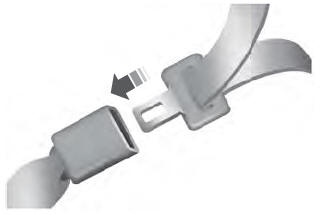

Copyright © 2026 www.liaviator2.com