
Lincoln Aviator 2020-2026 Service Manual / Body and Paint / Body and Paint / Body System - General Information / Specifications
Lincoln Aviator: Body System - General Information / Specifications
Materials
| Name | Specification |
|---|---|
| Seam Sealer TA-2-B, 3M™ 08308, LORD Fusor® 803DTM |
- |
| Motorcraft® High Performance Engine RTV Silicone TA-357 |
WSE-M4G323-A6 |
| Motorcraft® Silicone Spray Lubricant XL-6 |
ESR-M13P4-A |
| Permatex® Trim and Weatherstrip Adhesive 81850 |
- |

 Description and Operation - Body - Overview
Insulation
WARNING:
To prevent the risk of high-voltage shock, always follow
precisely all warnings and service instructions, including instructions
to depower the system...
Other information:
Lincoln Aviator 2020-2026 Owners Manual: Adaptive Cruise Control Limitations - Vehicles With: Adaptive Cruise Control With Lane Centering
Adaptive cruise control limitations apply to lane centering unless stated otherwise or contradicted by a lane centering limitation. The system may not correctly operate in any of the following conditions: Your vehicle is not centered in the lane...
Lincoln Aviator 2020-2026 Owners Manual: Anti-Theft Alarm
The active anti-theft system is designed to warn you in the event of unauthorized vehicle entry and is also designed to help prevent unwanted towing of your vehicle. You can choose what is monitored by arming the system in different ways. The direction indicators flash and the horn sounds if the system triggers while the alarm is armed...
Categories
- Manuals Home
- Lincoln Aviator Owners Manual
- Lincoln Aviator Service Manual
- Disabling Auto-Start-Stop
- Garage Door Opener
- General Procedures - Transmission Fluid Drain and Refill
- New on site
- Most important about car
Child Seats
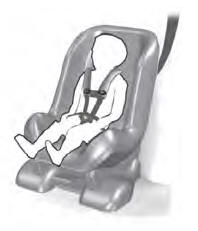
Use a child restraint (sometimes called an infant carrier, convertible seat, or toddler seat) for infants, toddlers and children weighing 40 lb (18 kg) or less (generally four-years-old or younger).
Using Lap and Shoulder Belts
WARNING: Do not place a rearward facing child restraint in front of an active airbag. Failure to follow this instruction could result in personal injury or death.

Copyright © 2026 www.liaviator2.com